Poolvergnuegen Pool Cleaner by Hayward

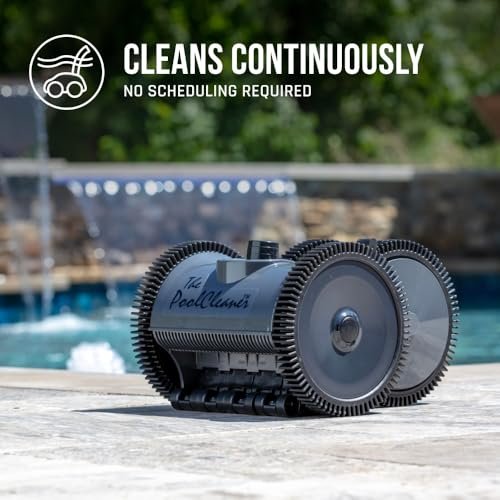
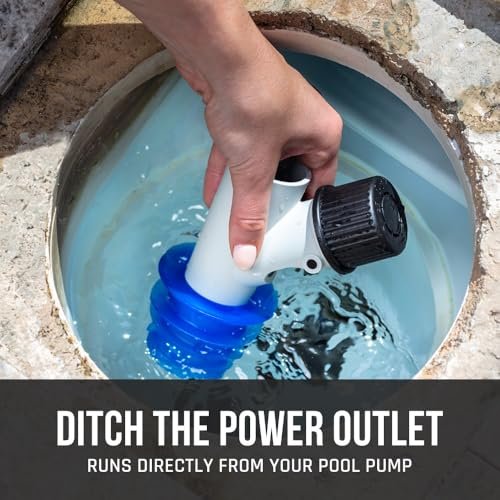
The Poolvergnuegen PoolCleaner runs off your existing pump — no booster pump, no separate power source, no complicated wiring. Patented self-adjusting turbine vanes flex to maintain movement at virtually any flow rate, including the lower RPM settings on variable-speed pumps where most suction cleaners stall out. Choose the 2-wheel model for pools up to 16×32 ft with 33 feet of hose, or the 4-wheel for pools up to 20×40 ft with a 40-foot hose and turns ranging from 90 to 540 degrees. Both models cover floors, walls, and coves on every common pool surface — gunite, vinyl, fiberglass, pebble tec, and tile.

✓ Works at 1,200 RPM✓ No booster pump needed✓ 4.5 stars, 3,100+ reviews
Shop The PoolCleaner on Amazon →
Frame
Runs at 1,200 RPM on Variable-Speed Pumps Runs at 1,200 RPM on Variable-Speed Pumps

The self-adjusting turbine vanes flex to maintain movement at lower pump speeds where other suction cleaners stall — pool owners on r/pools confirm reliable operation at 1,200 RPM without modifications.

Five Steering Sequences Cover the Whole Pool Five Steering Sequences Cover the Whole Pool

Pre-programmed internal sequences reverse the left wheel at intervals, executing turns from 90 to 540 degrees — that's how it reaches the shallow end instead of circling the deep end all afternoon.

Rebuild Kits Extend the Cleaner's Life Rebuild Kits Extend the Cleaner's Life

Both the 2-wheel and 4-wheel models have corresponding rebuild kits — tires include tread wear markers so you know it's time to replace them before performance drops, not after.

4.5 Stars Across 3,100+ Amazon Reviews 4.5 Stars Across 3,100+ Amazon Reviews

The complete cleaner models rank #3 in Suction Pool Cleaners on Amazon; Family Handyman tested the 2-wheel model for several months and reported no clogging even on small debris.

Poolvergnuegen PoolCleaner Models and Service Kits

The PoolCleaner lineup covers two pool size tiers in two color options each, plus purpose-built rebuild kits for owners who'd rather service their cleaner than replace it. Every complete cleaner shares the same patented turbine vane system, roller skirts, and programmed steering — the differences come down to pool size, hose length, and turn range.

Hayward W3PVS20JST Poolvergnuegen Suction Pool Cleaner

PoolCleaner 2-Wheel (White)

The most-reviewed PoolCleaner in the lineup, with 3,131 Amazon ratings at 4.5 stars. The 2-wheel drive model handles pools up to 16×32 ft, comes with 33 feet of hose, and travels 8–10 feet before each turn — executing turns from 90 to 450 degrees to cover both ends of the pool. Body weight is 4.9 lbs. White colorway.

The right choice for average-sized inground pools up to 16×32 ft — it's the volume seller for a reason, and the turbine vane system is confirmed working at variable-speed pump settings where simpler suction cleaners give up.

See on Amazon
Hayward W3PVS20GST Poolvergnuegen Suction Pool Cleaner for In-Ground Pools up to 16 x 32 ft. (Automatic Pool Vacuum)

PoolCleaner 2-Wheel (Gray)

Mechanically identical to the W3PVS20JST — same 2-wheel drive, 16×32 ft coverage, 33-foot hose, 90–450-degree turn range, and 4.9 lb body weight. The gray colorway is the practical differentiator here. Warranty is listed as 3 years in the product tech specs, the only model in the lineup where a specific warranty duration is explicitly confirmed.

Same cleaner as the white 2-wheel model, gray finish — the right pick if your pool equipment or decking runs charcoal or slate, and the 3-year warranty callout is worth noting.

See on Amazon
Hayward W3PVS40JST Poolvergnuegen Suction Pool Cleaner

PoolCleaner 4-Wheel (White)

The 4-wheel flagship covers pools up to 20×40 ft with a 40-foot hose — 7 feet longer than the 2-wheel model. It travels 11–14 feet before each turn and executes turns from 90 to 540 degrees, a meaningfully wider range than the 2-wheel's 450-degree maximum. Body weight is 6.6 lbs. White colorway, 4.5 stars across 3,131 reviews.

If your pool runs 17×33 ft or larger, or if you've had a suction cleaner that consistently missed the shallow end, the 4-wheel's extended turn range and longer hose are the two specs that change that outcome.

See on Amazon
Hayward W3PVS40GST Poolvergnuegen Suction Pool Cleaner for In-Ground up to 20 x 40 ft

PoolCleaner 4-Wheel (Gray)

The gray-finish version of the 4-wheel flagship — identical specs throughout: 20×40 ft pool coverage, 40-foot hose, 90–540-degree turns, 11–14 ft per travel cycle. Package weight with the full hose assembly is 19 lbs. Rated 4.4 stars from 788 reviews. The lower rating likely reflects the smaller review sample rather than any mechanical difference.

Same 4-wheel performance as the white W3PVS40JST in a gray finish — the choice for pools with gray or charcoal decking where the white colorway would look out of place.

See on Amazon
Frame Kit

Frame Kit

A frame conversion and upgrade kit designed specifically for the 2-wheel PoolCleaner. Metal construction, 2.2 lbs, user-installable without specialized tools. The kit replaces the frame assembly on an existing 2-wheel cleaner — returning it to current mechanical spec rather than buying a full replacement unit. Rated 4.6 stars from 293 reviews. Limited warranty.

For existing 2-wheel PoolCleaner owners with a cracked or worn frame — at 4.6 stars and 293 reviews, this is the most direct path to a working cleaner that doesn't involve starting over from scratch.

See on Amazon
Rebuild Kit

4-Wheel Lower Body Rebuild Kit

The most comprehensive service part in the lineup. Replaces the entire lower half of the 4-wheel PoolCleaner — wheels, frame, and main internals — and comes pre-assembled, which is what keeps the installation manageable. The product description states it "makes your old pool cleaner into the next-generation version." Rated 4.6 stars from 172 reviews. Dimensions: 12.5×12.5×10 inches.

For 4-wheel PoolCleaner owners dealing with gear wear or drive issues after 2–4 seasons — pre-assembled means the hard part is already done, and at 4.6 stars it's clearly working for the owners who've been through this before.

See on Amazon

2-Wheel or 4-Wheel — Which PoolCleaner Fits Your Pool?

Pool size is the starting point, but it's not the whole story. The two configurations differ in turn range, hose length, and how far the cleaner travels before each turn — and those differences matter more than they might look on paper, especially if full shallow-end coverage has been a problem with a previous cleaner.

Feature 2-Wheel (W3PVS20JST / W3PVS20GST) 4-Wheel (W3PVS40JST / W3PVS40GST)
Max pool size Up to 16' × 32' Up to 20' × 40'
Drive configuration 2-wheel drive 4-wheel drive
Hose length included 33 feet 40 feet
Turn range 90 to 450 degrees 90 to 540 degrees
Travel distance per cycle 8–10 feet before turning 11–14 feet before turning
Body weight 4.9 lbs 6.6 lbs
Pool surfaces Gunite, vinyl, fiberglass, pebble, tile Gunite, vinyl, fiberglass, pebble, tile
Available colors White, Gray White, Gray
Corresponding rebuild kit PVGXH792KIT (frame kit) PVGXH808KIT (lower body rebuild kit)
Amazon rating 4.5 stars (white) / 4.4 stars (gray) 4.5 stars (white) / 4.4 stars (gray)

If your pool is 16×32 ft or smaller and your pump is already sized for it, the 2-wheel model handles the job — it's lighter, the 33-foot hose reaches every corner of a pool that size, and the 450-degree turn range covers the shallow end reliably. Step up to the 4-wheel if your pool runs longer than 32 feet, if you've had coverage issues with a previous suction cleaner, or if you want the extra turn range and 40-foot hose as insurance on an irregularly shaped pool. Both configurations use the same turbine vane system and work with variable-speed pumps — so that's not a deciding factor between them.

Suction vs. Robotic — What Pool Owners Actually Switch Between

Suction-side cleaners and robotic cleaners aren't competing for the same buyer in every situation. The Poolvergnuegen PoolCleaner is the right tool for a specific job — and being honest about where that job ends is more useful than pretending suction-side handles everything equally well.

Where suction-side cleaners genuinely win

A suction-side cleaner like the PoolCleaner runs off the pump you already own. There's no separate motor to burn out, no charging cycle to manage, and no power cord to manage at poolside. The turbine vane system draws debris directly into your existing filter, which means no separate debris canister to empty after every run. For a pool that gets regular use and accumulates fine sediment, small leaves, and light organic debris on a daily basis, a suction cleaner running while your pump cycles is genuinely the lowest-effort setup possible.

The PoolCleaner specifically handles variable-speed pump operation — confirmed working at 1,200 RPM in real conditions — which is something most suction cleaners can't claim. Pool service techs on r/pools have called it the best suction sweep on the market, and the reasoning is practical: fewer wear parts than a Hayward Navigator, no booster pump to install like a pressure-side cleaner requires, and a turbine vane design that passes larger debris instead of clogging on it.

Where robotic cleaners have a real edge

Robotic cleaners climb walls and actively scrub surfaces with dedicated brushes. That's not something suction-side cleaners do well — and it's worth saying directly. The PoolCleaner's patented tire treads provide some incidental scrubbing on rough surfaces like pebble tec, but for pools with algae on the walls or significant waterline buildup, a robotic cleaner with an active scrubbing brush will outperform it there.

Poolvergnuegen - Hand connecting Hayward pool cleaner suction hose cone adapter into pool skimmer drain with power-free opera

Robotics also run independently of your pump. If your pool has a tree canopy directly above it and you're dealing with heavy leaf loads multiple times a week — not daily fine debris, but actual leaf accumulation — a two-hour robotic run handles that load in a way that doesn't require pre-clearing before dropping a suction cleaner in. Some owners on Trouble Free Pool have made exactly this switch after years with a suction cleaner, and their reasoning was consistent: the leaf load exceeded what a suction-side setup handles efficiently without manual intervention first.

How to decide

The honest answer is that pool type and debris load determine this more than brand preference does. Here's the practical breakdown:

  • Regular fine debris, leaves within reason, a variable-speed pump already installed — the PoolCleaner is the right call. It runs continuously during your pump cycle and handles routine maintenance without adding equipment complexity.
  • Heavy seasonal leaf loads, significant wall algae, or a preference for active surface scrubbing — a robotic cleaner earns its price premium in that specific scenario.
  • Above-ground pools — neither model is rated for above-ground use. Both the 2-wheel and 4-wheel PoolCleaner models are designed for inground pools only.

The suction vs. robotic debate on r/pools runs hot, but most experienced pool owners land on the same conclusion: suction-side cleaners win on running cost and simplicity for routine maintenance; robotics win on wall scrubbing and independence from the pump. The PoolCleaner doesn't pretend to be both.

What Owners Actually Experience Over Time

Family Handyman tested the 2-wheel PoolCleaner for several months and reported no clogging even on small debris — which lines up with what the turbine vane design is supposed to do. But there are real-world performance patterns worth knowing before you buy, both the good and the frustrating.

Floor coverage is the strength

The PoolCleaner is a floor cleaner first. The programmed steering sequences — five pre-set turn patterns executing turns from 90 to 450 degrees on the 2-wheel, 90 to 540 on the 4-wheel — mean it doesn't repeat the same path on every run. Over the course of a cleaning cycle, it covers the full floor area including the shallow end, which is the failure mode that drives people away from cheaper suction cleaners. Owners who've had a Kreepy Krauly or Baracuda that spent all afternoon in the deep end notice the difference immediately.

Wall climbing is limited

Don't expect aggressive wall scrubbing. The patented tire treads help with obstacle maneuverability and some incidental wall contact, but the PoolCleaner isn't designed to climb walls the way a dedicated robotic cleaner does. On smooth vinyl or fiberglass, wall climbing is minimal. On rough gunite or pebble tec, the tires get more traction and the cleaner travels up the wall surface more consistently — but this is secondary to its floor cleaning function. If spotless walls are the priority, brush them manually and let the cleaner handle the resulting debris on the floor.

Poolvergnuegen - Disassembled white pool cleaner frame showing gear mechanism, two wheels, and small mounting hardware compon

Gear wear is real and normal

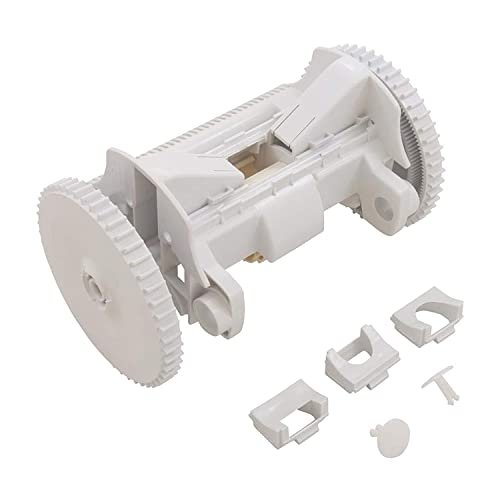
The internal nylon drive gears wear out. This shows up consistently in r/pools threads, and it's not a defect — it's expected mechanical wear on a device with a turbine-driven gear train running for hours every day. The realistic service interval is 2–3 seasons depending on run frequency. When it happens, the cleaner slows noticeably or starts moving erratically. The rebuild kits exist specifically for this: the PVGXH808KIT for the 4-wheel replaces the entire lower body pre-assembled, and the PVGXH792KIT handles the 2-wheel frame. Neither requires specialized tools, and the disassembly process takes roughly 30 minutes.

The hose is the weak point

The included hose is the most consistently criticized component across owner reviews. It's functional out of the box, but long-term UV and chemical exposure can cause cracking and stiffening faster than the cleaner itself wears out. Some owners replace it after a couple of seasons with an aftermarket hose set. This is worth factoring in when thinking about long-term ownership cost — the cleaner body outlasts the hose in many installations, not the other way around.

Turbine vane misalignment

Occasionally, the turbine vanes shift in their holders under debris pressure and the cleaner stops moving. This sounds alarming but it's a 3-minute fix: open the top, reseat the vanes, close it up. It's user-serviceable and happens infrequently under normal conditions. Worth knowing about before it happens so you don't mistake it for a mechanical failure.

Getting the PoolCleaner Set Up Right the First Time

Most "this cleaner doesn't work" experiences trace back to setup, not the cleaner itself. The three variables that matter most are hose weight placement, flow rate verification, and throat size selection — get those right and the PoolCleaner runs the way the specs describe. Get them wrong and you'll be troubleshooting a product that was never the problem.

Verify flow rate with wheel RPM

Don't guess at pump speed settings. The most reliable way to confirm the cleaner is receiving the right suction is to watch the drive wheel rotate and count turns per minute. Target range is approximately 11–13 RPM. Too slow — below 11 RPM — and the cleaner drags, moves poorly, and may stall in place. Too fast — above 13 RPM — causes excessive tire wear and erratic steering.

On single-speed pumps, you're typically adjusting flow through a valve. On variable-speed pumps, start around 2,400 RPM and work down. The self-adjusting turbine vanes allow the cleaner to function at lower pump speeds than competing designs — owners have confirmed reliable operation at 1,200 RPM — but the wheel RPM count is still how you verify you're actually in range, regardless of what the pump display reads. Every pool's plumbing is different, and pipe diameter, run length, and the number of fittings all affect actual flow at the cleaner.

Hose weight placement changes everything

The hose weights that come with the cleaner exist for a reason, and wrong placement is the single most common cause of poor coverage. The hose needs to stay submerged throughout the cleaning cycle. When weights are missing or bunched at one end, the hose floats to the surface, coils, and physically restricts where the cleaner can travel — the cleaner runs circles in one section of the pool while the rest goes uncleaned.

Poolvergnuegen - Hand inserting Hayward pool cleaner suction hose adapter into pool skimmer with ditch the power outlet marke

Space the weights evenly along the hose length starting about 3 feet back from the cleaner. You want the hose to sink in a gradual arc rather than floating in loops at the surface. It takes a few minutes to adjust after the first run. Once it's right, coverage improves noticeably.

Throat size by debris type

The three interchangeable throat sizes are the tuning variable most owners skip. They shouldn't. Here's how to think about them:

  • Smaller throat: Concentrates suction force at the mouth. Best for fine sediment, sand, and light organic debris that tends to stay on the pool floor rather than floating.
  • Middle throat: A solid default for mixed debris — light leaves, bugs, small twigs, general seasonal accumulation. Start here if you're unsure.
  • Larger throat: Lets bulkier debris pass without clogging. Right choice for pools under trees with regular leaf loads. Note: if leaf accumulation is heavy before a run, clear the worst of it manually first — no throat size handles a 2-inch mat of wet leaves efficiently.

Dedicated suction port vs. skimmer

Both work. But if your pool has a dedicated suction port — a separate wall fitting specifically for a pool cleaner, distinct from the skimmer — use it. A dedicated line means suction isn't split between surface skimming and the cleaner, which translates to more consistent flow to the cleaner throughout the pump cycle. If your pool only has a skimmer, the included skimmer plate adapter handles it fine. Just be aware that during the cleaning cycle, your surface skimming function is partially redirected to the cleaner.

Where the 4-wheel has a setup advantage

On pools with a raised main drain cover — not a flat VGB-compliant cover, but a raised dome-style fitting — the 4-wheel model's broader contact patch and stronger torque help it clear the obstruction rather than getting stuck on it. If main drain hang-ups have been an issue with a previous cleaner, the 4-wheel is the better choice here independent of pool size.

Warranty Coverage and Replacement Parts Availability

The W3PVS20GST (2-wheel gray) lists a 3-year warranty in its tech specs — the only model in the PoolCleaner lineup where a specific warranty duration is explicitly confirmed in the product listing. The other complete cleaner models list a "limited warranty" without a specific duration stated. For warranty questions on any specific model, check the current Amazon listing or contact Hayward Pool Products directly.

What the rebuild kits actually cover

Both complete cleaner configurations have corresponding service kits, and this is genuinely useful to understand before something wears out rather than after.

  • The PVGXH792KIT is the frame upgrade kit for the 2-wheel PoolCleaner — metal construction, 2.2 lbs, user-installable without specialized tools. It returns a worn or cracked frame to current spec. Rated 4.6 stars from 293 reviews.
  • The PVGXH808KIT is the lower body rebuild kit for the 4-wheel — replaces the entire lower half including wheels, frame, and drive internals. It comes pre-assembled, which is the part that makes this manageable for DIY owners. Hayward's own product description calls it a kit that "makes your old pool cleaner into the next-generation version." Rated 4.6 stars from 172 reviews.

Both kits rank in the top 230 listings for Automatic Pool Cleaner Replacement Parts on Amazon — which means they're stocked and selling, not a niche hard-to-find part that shows up six weeks after you need it.

Where to source parts beyond the kits

Individual components — tires, turbine vane assemblies, hose sections — are stocked at INYOpools, Leslie's Pool Supplies, and PoolZoom. Hayward's parts infrastructure is one of the practical advantages of buying a cleaner from a brand with that kind of distribution network. A Poolvergnuegen PoolCleaner that's two or three seasons old isn't an orphaned product when something wears out. Parts exist, they're findable, and the disassembly process is straightforward enough that most pool owners with basic mechanical comfort level handle it themselves.

The tread wear markers built into the tires are worth calling out again here: they're a practical feature that tells you when replacement is due before performance degrades, not after you've spent two weeks wondering why the cleaner has lost traction. That kind of design decision signals that Hayward built this product with the expectation that owners would be servicing it themselves over time.

What a Pool Pro Thinks of the 2-Wheel PoolCleaner

This hands-on review from Swimming Pool Learning — one of YouTube's most-watched pool care channels — covers the 2-wheel Poolvergnuegen suction-side cleaner from a technician's perspective. With over 61,000 views, it's one of the most-watched independent takes on this specific model. The reviewer calls it one of his favorites, so you'll get an honest read on real-world performance rather than a spec-sheet rundown. It's worth watching before you finalize your decision.

What PoolCleaner Owners Say After a Few Seasons

"I've had the 2-wheel running on my variable-speed pump for two seasons now and it still works exactly like it did on day one. I run the pump at lower speeds to save on electricity, and this thing just keeps moving — I tried a different suction cleaner first that basically stopped working the moment I turned the pump below 2,200 RPM. The PoolCleaner handles it without any fuss."
— Marcus T., variable-speed pump owner upgrading from a previous suction cleaner
"My pool tech friend specifically told me to get this one and not the Navigator. Four years in, I've had to pull it out for an occasional clog — which is rare — and that's about it. It's an absolute workhorse. I haven't touched the internals and it still gets into the shallow end every time, which my old cleaner never managed."
— Diane K., long-term owner, 16×28 ft gunite pool
"The 4-wheel model covers my 18×36 pool completely — I can see the tire tracks on the floor after a run and it genuinely reaches every corner. The hose that comes with it is fine to start, but I'd budget for a replacement hose after a couple of seasons. The cleaner itself? Still going strong. Just the hose showed wear first."
— Rob F., first-time PoolCleaner buyer, larger inground pool
"Bought the lower body rebuild kit after about three seasons when I noticed the cleaner slowing down. The kit came pre-assembled which made the whole swap straightforward — I had it back in the pool in under 45 minutes. Would have cost three times as much to replace the whole unit. Runs like new again."
— Carla M., DIY pool owner who serviced her 4-wheel PoolCleaner
"Tested it for months and it never once clogged on small debris, which was my main concern after two cleaners that seemed to jam on anything larger than a grain of sand. It's slow and methodical, but by the end of a cycle the floor is genuinely clean. Just don't expect it to scrub the walls the way a robot would — that's not what this thing does."
— James W., multi-month tester, 2-wheel model on fiberglass pool
"Gray color was the reason I went with the GST over the white model — my pool deck is charcoal and the white just looked wrong in the water. Mechanically it's identical to the white version and it runs exactly as described. Only minor gripe is I had to adjust the hose weights on the first day before it was covering the whole pool properly. Once that was sorted, no complaints."
— Tanya R., gray 2-wheel model owner with aesthetic preference for matching pool equipment

Questions About the Poolvergnuegen PoolCleaner

What are the best suction pool cleaners for inground pools?

The Poolvergnuegen PoolCleaner consistently ranks among the top suction-side options for inground pools — it holds the #3 position in Suction Pool Cleaners on Amazon with over 3,100 reviews at 4.5 stars. Pool service professionals on r/pools specifically recommend it for its variable-speed pump compatibility and turbine vane design that handles debris without clogging. For inground pools up to 16×32 ft, the W3PVS20JST is the volume pick; for larger pools up to 20×40 ft, the W3PVS40JST covers the additional square footage with a 40-foot hose and wider turn range.

Poolvergnuegen 2-wheel or 4-wheel — which should I buy?

Start with pool size. The 2-wheel model (W3PVS20JST / W3PVS20GST) is rated for pools up to 16×32 ft with a 33-foot hose and turns from 90 to 450 degrees. The 4-wheel (W3PVS40JST / W3PVS40GST) handles pools up to 20×40 ft, includes a 40-foot hose, and executes turns from 90 to 540 degrees — traveling 11–14 feet between turns versus 8–10 on the 2-wheel. If your pool is at or near the 2-wheel's size limit, or if shallow-end coverage has been a persistent issue with a previous cleaner, step up to the 4-wheel.

Is the Poolvergnuegen PoolCleaner good for variable-speed pumps?

Yes — and this is one of the cleaner's real differentiators. The patented self-adjusting turbine vanes flex to maintain movement at lower flow rates where most suction cleaners stall. Pool owners on r/pools have confirmed reliable operation at 1,200 RPM on variable-speed pumps — well below the 2,200–2,400 RPM that most competing suction cleaners require to function. Verify your setup is in range by watching the drive wheel and counting rotations; target is approximately 11–13 RPM.

What pool vacuum do pool service professionals use?

A pool service technician on r/pools described the PoolCleaner as "basically the best suction sweep on the market." The practical reasons professionals favor it: fewer wear parts than a Hayward Navigator, no booster pump required unlike pressure-side cleaners, and a turbine vane system that passes larger debris instead of jamming on it. It's also one of the more serviceable designs in the category — when gears wear, rebuild kits replace the affected components rather than requiring full unit replacement.

What is the life expectancy of a pool vacuum cleaner?

A suction-side cleaner like the PoolCleaner can run for many seasons with proper maintenance, but the internal nylon drive gears typically show wear at 2–3 seasons depending on daily run time and debris load. This is normal mechanical wear, not a defect. The PVGXH808KIT lower body rebuild kit for the 4-wheel and the PVGXH792KIT frame kit for the 2-wheel are specifically designed to restore a worn cleaner to current mechanical spec rather than replacing the whole unit — extending the functional life well beyond that initial wear interval.

Does the Poolvergnuegen PoolCleaner work on all pool surfaces?

The PoolCleaner is confirmed compatible with gunite, vinyl, fiberglass, pebble tec, and tile surfaces. The patented adjustable roller skirts maintain suction on uneven surfaces by lifting individually when the cleaner passes over obstacles or raised fittings, then seating back down — which is what keeps it from losing suction on rough pebble tec or pools with patched gunite sections. Both the 2-wheel and 4-wheel models share this feature. Note that both models are rated for inground pools only.

What is the difference between Poolvergnuegen and the Hayward AquaNaut?

Hayward acquired Poolvergnuegen approximately 8–9 years ago, and the AquaNaut is Hayward's updated successor to the Poolvergnuegen 4-wheel design. An Amazon Q&A response on the PoolCleaner listing describes the AquaNaut as "an updated and improved version of the Poolvergnuegen 4-wheel." The PoolCleaner line — manufactured by Hayward Pool Products — continues to be sold under the Poolvergnuegen name. If you're comparing the two, you're looking at different generations of what is fundamentally the same design lineage.

Does the PoolCleaner need a booster pump to operate?

No. The Poolvergnuegen PoolCleaner is a suction-side cleaner that draws power entirely from your existing pool pump and filter — no booster pump required, no separate power source. It connects to either a dedicated suction port in the pool wall or directly to the skimmer using the included adapter plate. This is a meaningful difference from pressure-side cleaners like the Polaris 280, which require a dedicated booster pump to function.

How Poolvergnuegen Became the Suction Cleaner Pool Pros Recommend

Poolvergnuegen — German for "pool pleasure" — built its reputation as a suction-side specialist long before Hayward acquired the brand roughly 8–9 years ago. The core engineering focus never changed: a suction cleaner that works with the pump you already own, passes debris without jamming, and keeps running at the lower flow rates that variable-speed pumps produce. That specific problem — suction cleaners that stall when VS pump adoption started accelerating — is where the self-adjusting turbine vane design proved its value in the field. The vanes flex open at lower flow rates rather than stalling, which sounds simple but is the reason pool service professionals kept recommending this cleaner when other suction-side designs became unreliable as VS pumps spread.

The Hayward acquisition brought manufacturing infrastructure and parts distribution without changing what the PoolCleaner is. Hayward Pool Products manufactures the line today, which means replacement parts — tires, turbine assemblies, rebuild kits — are stocked at major pool supply retailers across the country rather than being a hard-to-source specialty item. That distribution reality matters more than it gets credit for. A suction cleaner that becomes an orphaned product after two seasons is a lousy long-term investment regardless of how well it ran when new. The PoolCleaner's rebuild kits exist because Hayward expects owners to service these units over multiple seasons, not replace them.

The product line has stayed deliberately simple: two pool size tiers, two color options each, and corresponding service kits. No pressure-side models, no robotic cleaners, no accessories that blur the focus. Suction-side specialist is the position, and the lineup reflects it. The #3 Amazon ranking in Suction Pool Cleaners and a combined 4.5-star rating across more than 3,100 reviews didn't come from a broad product catalog — they came from doing one specific job well enough that pool service professionals recommend it by name.

About Poolvergnuegen

Poolvergnuegen is a suction-side pool cleaner brand manufactured by Hayward Pool Products, one of the largest pool equipment manufacturers in North America. The PoolCleaner line — including both complete cleaner models and the corresponding rebuild kits — is sold through Amazon and major pool supply retailers. The Poolvergnuegen name has been part of the Hayward family for approximately 8–9 years, with manufacturing and parts distribution backed by Hayward's supply chain.

Customer Support

For warranty questions, product support, or technical assistance, contact Hayward Pool Products directly through their official site at hayward.com. For questions specific to Amazon orders — shipping, returns, or order status — contact the seller through your Amazon account. You can also reach Hayward's customer support line. Support documentation and installation guides for PoolCleaner models are available through Hayward's product pages.

Warranty and Parts

The W3PVS20GST (2-wheel gray) lists a 3-year warranty in its product tech specs — the only PoolCleaner model where a specific warranty duration is explicitly confirmed in the current listing. Other complete cleaner models carry a limited warranty; check the current Amazon listing or contact Hayward directly for warranty terms specific to your model. Replacement parts — tires, turbine assemblies, hose sections, and the full rebuild kits (PVGXH792KIT and PVGXH808KIT) — are stocked through INYOpools, Leslie's Pool Supplies, PoolZoom, and Hayward's own parts network.